
Walmart flyer
October 15 – October 21, 2026
Use the Walmart flyer to compare your planned grocery basket and decide where shopping best fits your household budget.
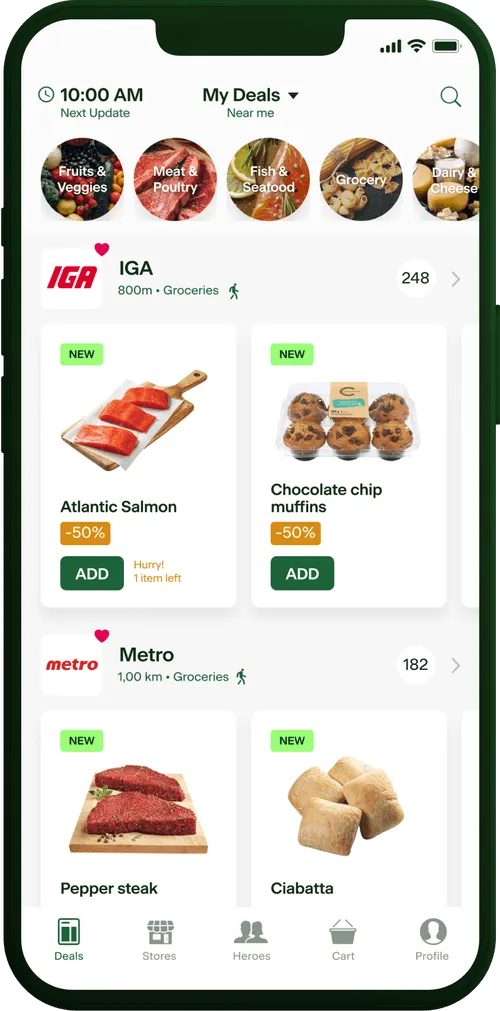
Save up to 60% on your groceries. Download FoodHero for free now!


Start with the Walmart flyer this week when comparing the cost of your next grocery trip. This gallery shows all 21 pages for October 15 - October 21, 2026, so you can review the big-box store’s flyer and note purchases that match your existing needs.
When is the Walmart flyer valid?
The flyer covers October 15 - October 21, 2026. All 21 pages are available in the gallery for this period.
Compare a complete basket before choosing Walmart
The most useful comparison starts with one consistent shopping list. Write down the foods and household essentials you need, including the amounts, before looking through flyers. This keeps an appealing individual price from determining an otherwise expensive trip.
For fall, build the list around the meals your schedule allows. A plan for warm lunches or simple oven dinners can help you identify what matters, but avoid adding ingredients solely because a recipe sounds seasonal.
- List essential purchases and the quantities you will use.
- Record comparable package sizes and displayed prices.
- Calculate unit costs when the information is available.
- Add up the items you can meaningfully compare.
- Include travel expenses before deciding on extra stops.
Read the weekly pages without expanding your list
Review the Walmart weekly flyer with your essentials clearly marked. Separate needed replacements from optional purchases, and avoid treating an unfamiliar item as a saving when you had no reason to buy it.
When comparing a grocery flyer with another flyer, check that the validity periods cover your shopping date. Compare equivalent products and sizes rather than assuming similar-looking packages represent the same amount.
Leave unknown prices out of firm savings calculations. A partial comparison can still help you plan, but it should not be mistaken for the confirmed cost of an entire basket.
Choose a practical trip, not just a lower subtotal
Use your Walmart flyer notes to decide whether one stop meets your needs. An additional trip may add fuel or transit costs and take time you need for cooking or other responsibilities.
Set a minimum reason for making a second stop before leaving home. If the expected benefit is unclear, simplify the plan. During the shop, keep unrelated purchases separate from your grocery total so you can see whether your food spending stayed on track.
Keep comparison shopping tied to your budget
To save on groceries, compare the planned cost with the amount your family can spend this week. A basket can be cheaper than another option and still exceed your limit.
Remove optional items before cutting ingredients needed for planned meals. Keep your receipt and use the actual total to improve your next comparison, rather than relying only on the estimate you made beforehand.