


In traditional astrology, the zodiac signs are a symbolic way to organize the Sun's path through twelve sections of the sky. The 12 zodiac signs, in order, are Aries, Taurus, Gemini, Cancer, Leo, Virgo, Libra, Scorpio, Sagittarius, Capricorn, Aquarius and Pisces. The dates below are conventional ranges, and signs near a boundary can vary by year, birth time and time zone.
Zodiac: Definition
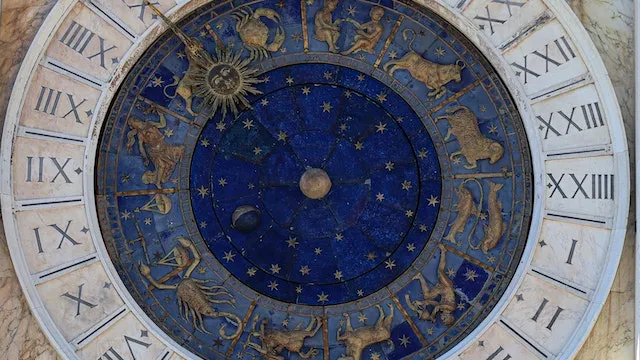
The zodiac is a celestial coordinate system that is used in astrology to describe the positions and movements of celestial bodies in relation to the Earth.
It consists of a band of constellations that extends approximately 8° north or south (as measured in celestial latitude) of the ecliptic, the apparent path of the Sun across the celestial sphere over the course of the year.
The term "zodiac" comes from the Greek zōidiakos kyklos, meaning "circle of animals", as the constellations through which the ecliptic passes are traditionally represented by animals or mythological creatures.
The origins of the zodiac signs
The origins of the zodiac signs can be traced back to ancient civilizations in Babylon, Greece, and Egypt.
The Babylonians
The Babylonians (credited to be the first known system of astrology) used astrology to predict the future and interpret the will of their gods.
They divided the sky into twelve sections, each corresponding to specific zodiac signs, with each having specific attributes.
The Egyptians
The Egyptians also had a system of astrology, which was closely tied to their religion. They divided the sky into 36 decans, each corresponding to a specific star group, with specific attributes as well.
Like the Babylonians, the Egyptians used astrology to predict the future and to communicate with the divine.
The ancient Greeks
The ancient Greeks then developed their own system, inspired by both the Babylonians and the Egyptians. They assigned the twelve zodiac signs to the twelve houses of the sky and associated them with specific deities.
The Greeks believed that, at the time of someone's birth, the positions of the planets and the signs of the zodiac had a profound influence on their personality and fate.
Throughout the centuries, the zodiac signs have evolved and been adapted by various cultures around the world.
Today, the Western astrological system, which is based on the Greek and Roman traditions, is the most widely recognized and utilized system of astrology.
Western astrology: 12 zodiac signs dates & meaning

Aries: March 21–April 19 🔥
Aries is the first of the 12 astrological signs and represents the ram. Those born under this star sign are energetic, confident, and independent.
They are also known to be natural-born leaders, and love to take risks.
In relationships, they can be passionate and devoted, but may also struggle with jealousy and possessiveness.
Here's a detailed overview of the Aries zodiac sign
Taurus: April 20–May 20 🍃
Taurus (represented by the bull) is known for stability, reliability, and practicality.
People born under this sign tend to be patient and persistent, and aren't influenced by others. Furthermore, Taurus love living in comfort and luxury.
In relationships, they can be affectionate and devoted, but also possessive and stubborn.
Here's a detailed overview of the Taurus zodiac sign
Gemini: May 21–June 20 🌪️
Geminis are known for their versatility, adaptability and intellectual curiosity. They are often quick-witted and have a love of learning and communication.
They're also known for their ability to see many sides of an issue (and indecisive as a result).
In relationships, Gemini can be affectionate and loyal, while struggling with emotional distance.
Here's a detailed overview of the Gemini zodiac sign
Cancer: June 21–July 22 🌊
Cancers are known for their emotional depth and sensitivity.
They're intuitive, with a deep love for home and family (Causing them to focus on the well-being of others).
In relationships, Cancers are caring and nurturing, but are sensitive people that tend to hold grudges.
Here's a detailed overview of the Cancer zodiac sign
Leo: July 23–August 22 🔥
Leos are known for their confidence, leadership abilities, and creativity.
They're warm, generous and have a strong sense of personal pride. They also love all types of attention and appreciation.
In relationships, Leos can be passionate and loyal but also possessive in the process.
Here's a detailed overview of the Leo zodiac sign
Virgo: August 23–September 22 🍃
Virgo, represented by the virgin, is intelligent and very practical. They're perfectionist people that pay attention to every single detail.
Their ability to solve any problem fuels their desire to help others.
In relationships, Virgos are loyal and dedicated, but their perfectionist trait causes them to be very critical.
Here's a detailed overview of the Virgo zodiac sign
Libra: September 23–October 22 🌪️
Libras are known for their charm, diplomacy, and sense of justice. They're often balanced and fair-minded, allowing them to always see both sides of an issue.
Additionally, they have a profound love of aesthetics.
In relationships, Libras are loving and charming, but may also choose to avoid confrontations, which can make their relationships more challenging.
Here's a detailed overview of the Libra zodiac sign
Scorpio: October 23–November 21 🌊
Intense, passionate, and mysterious. Those are the 3 words that describe Scorpios best.
Furthermore, they're determined and resourceful, with a strong sense of intuition.
In relationships, Scorpios have true emotional depth, which makes them loyal but also jealous and possessive.
Here's a detailed overview of the Scorpio zodiac sign
Sagittarius: November 22–December 21 🔥
Those born under the sign of Sagittarius are known for their adventurous spirit, optimism, and sense of humor. They're independent and curious, which makes them the perfect explorers.
In relationships, Sagittarius can be loving and loyal, but may also struggle with restlessness and a tendency to avoid commitment.
Here's a detailed overview of the Sagittarius zodiac sign
Capricorn: December 22–January 19 🍃
Those born under the sign of Capricorn are known for their ambition, discipline, and practicality.
They're hard-working and really driven. In relationships, they can be devoted and loyal, but their determination often leads them to prioritize their goals over their personal relationships.
Here's a detailed overview of the Capricorn zodiac sign
Aquarius: January 20–February 18 🌪️
Aquarius are unconventional and are known to think outside the box a lot. For them, the 2 most important things are innovation and progress.
But don't be fooled: Aquarius are very human and have a strong desire to make a positive impact on the world.
In relationships, they can be loyal, supportive but also independent, which could cause them to be emotionally detached.
Here's a detailed overview of the Aquarius zodiac sign
Pisces: February 19–March 20 🌊
Pisces is the twelfth and final sign of the zodiac (in Western astrology). They're known for their sensitivity, compassion, and creativity.
Additionally, they tend to see spirituality and connection with the divine as a priority.
In relationships, Pisces can be caring and dedicated, but could also be sensitive and "needy" emotionally.
Here's a detailed overview of the Pisces zodiac sign
What are the zodiac symbols?
In general, the zodiac symbols are thought to represent the unique qualities and energies of each sign, as well as their associations with the elements (fire, earth, air, and water).
Aries: Ram ♈
Taurus: Bull ♉
Gemini: Twins ♊
Cancer: Crab ♋
Leo: Lion ♌
Virgo: Virgin ♍
Libra: Scales ♎
Scorpio: Scorpion ♏
Sagittarius: Archer ♐
Capricorn: Goat ♑
Aquarius: Water bearer ♒
Pisces: Fish ♓
Understanding the elements in astrology
The zodiac signs are separated into four elements: fire, water, earth, and air signs.
The fire signs (Aries, Leo, and Sagittarius) : The fire signs are bold, audacious, inventive, and daring; they can also burn too brightly and have fiery tempers
The Water signs (Cancer, Scorpio, and Pisces) : The water signs are emotional, intuitive, and deeply connected with their subconscious. Feelings may at times overwhelm them. They are always there to support their loved ones
The earth signs (Taurus, Virgo, and Capricorn) : The earth element signs are solid and practical, yet they are also sensual and drawn to material goods. They can be stubborn and uncooperative
The air signs (Gemini, Libra, and Aquarius) : The air signs are talkative, sharp, and intellectual, but they can also be easily enthralled by speculation and ideology
What do the planets mean in astrology?

"Hey, what's your zodiac sign?"
When people ask you this question, it typically means they want to know your sun sign. This is because the sun is your main birth sign.
But there's a lot more to it, and to be honest, your sun is only the surface of what your personality traits are.
In fact, your full birth chart also displays the Moon's position and all the other planets' positions when you were born.
Here is an overview of how the different planets are interpreted in astrology:
The Sun

The sun is the center of the solar system, and it's the star around which all the planets orbit. In astrology, the sun represents the ego, the self, and one's sense of identity.
The sun's influence is most strongly felt in a person's sense of confidence and their ability to shine in the world.
The Moon

The moon is Earth's only natural satellite. In astrology, the moon represents emotion, the unconscious, and your inner world. It influences your emotional responses and your ability to connect with your true feelings.
Mercury

Mercury is the planet closest to the sun, and is known for its rapid orbit. Mercury represents communication, the mind, and the way you process and express information. The influence of mercury will be felt in your ability to think and communicate clearly.
Venus

Venus is the planet of love, beauty, and romance. Its position in your natal chart reveals how you give and develop relationships. It influences your ability to connect with others and express love and beauty.
Mars

Yup, you guessed it! On the opposite side of love (Venus), you'll find Mars. This planet represents energy, action, and desire. It also influences your drive, ambition and ability to take action.
Saturn

Stable, organized, lessons, and discipline: Saturn may appear to be all work and no play, but there is a silver lining. Saturn can indicate where you may obtain benefits from the steady and steadfast effort. Saturn astrological sign can also represent the stability of relationships.
Jupiter

Jupiter is the planet of growth and abundance. Its position in your chart shows where and how you can experience prosperity. In essence, it's your heavenly gold mine.
Uranus

This is the only planet in the solar system that spins on its side! It's all about new technology, discovery, and society. Your Uranus astrological sign indicates whether and how you can embrace life's unusual aspects.
Neptune

Spiritual, therapeutic, and artistic themes are all connected to the Neptunian realm. This planet might provide a dose of Hollywood fantasy or a means to escape from reality. If your Sun or Moon is close to this position, creating your own dream world on Earth may be natural for you!
Pluto
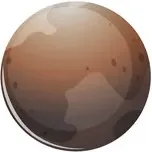
Pluto indicates where you might grow tremendously. Seeing Pluto may be frightening to an astrologer, but don't be scared of change! Transformation is a positive thing, and we can't progress without it.
Now that you've learned all of that, you can start looking at your natal chart and really go deep to try to understand different aspects of your personality.
You might even learn a thing or two about you that you didn't know!
Astrology compatibility
Some people believe that astrological compatibility can be a useful tool for predicting how well two people will get along in a relationship, whether it be romantic, platonic, or professional.
There are many different ways to analyze astrological compatibility, but one common method is to compare two people's sun sign.
Some astrologers believe that certain sun signs are more compatible with one another, while others may be less compatible.
For example, some astrologers believe that the fire signs (Aries, Leo, and Sagittarius) are generally more compatible with one another due to their energetic and passionate natures, while the earth signs (Taurus, Virgo, and Capricorn) are generally more compatible due to their practical and grounded natures.
Find out whether you and your partner are soul mates, BFFs, or a recipe for disaster!

Polarity in astrology
In Western astrology, polarity divides the twelve signs into two groups: positive signs (fire and air) and negative signs (earth and water).
The signs within an element are believed to have a particular mode of expression, or polarity, which is either positive or negative. The polarity of a sign is believed to have an influence on a person's personality and how they express themselves.
For example, someone with a strong Aries influence in their astrological chart may be more assertive and confident, while someone with a strong Pisces influence may be more emotional and introspective.
Modalities in astrology
In astrology, the modalities refer to the three main categories of astrological signs: cardinal, fixed, and mutable. These categories are based on the qualities associated with each sign and are thought to have an influence on the way a person approaches life challenges.
- Cardinal signs (Aries, Cancer, Libra, Capricorn): These signs are associated with the qualities of leadership, initiative, and ambition
- Fixed signs (Taurus, Leo, Scorpio, Aquarius): These signs are linked with the qualities of stability, determination, and persistence
- Mutable signs (Gemini, Virgo, Sagittarius, Pisces): These signs are connected with the qualities of adaptability, flexibility, and versatility
When learning about astrology, try noting the difference between the qualities by observing two people with planets in the same element.
For example, you might have two earth sign friends, giving you a great chance to note the different "quality" between a Capricorn and a Virgo. It takes time to note these subtleties, especially since we are usually a complex mix of many signs.
Essential dignities in astrology
In astrology, the concept of essential dignities refers to the related strength or weakness of a planet in a precise sign.
- Dignity: When a planet is compatible with a sign and with its nature and can therefore express itself more thoroughly and effectively.
- Detriment: This is the opposite of dignity. It's when a planet clashes with a certain sign, which does not allow it to express itself fully.
- Exaltation: A planet is considered to be in its exaltation when it's in a sign that brings out the best in it (its best qualities and highest potential).
- At fall: A planet is in its fall when it is in a sign that diminishes its effectiveness and suppresses its positive qualities.
The following table illustrates the essential dignities of the planets:
Zodiac signs by month
Each calendar month includes parts of two zodiac signs. Find your birth month below, then check which date range includes your birthday. These conventional tropical zodiac sign dates offer a quick guide to your sun sign, though the exact transition between signs can vary with the year and time of birth.
| Month | Sign until... | Sign from... |
|---|---|---|
| January | Capricorn through January 19 | Aquarius from January 20 |
| February | Aquarius through February 18 | Pisces from February 19 |
| March | Pisces through March 20 | Aries from March 21 |
| April | Aries through April 19 | Taurus from April 20 |
| May | Taurus through May 20 | Gemini from May 21 |
| June | Gemini through June 20 | Cancer from June 21 |
| July | Cancer through July 22 | Leo from July 23 |
| August | Leo through August 22 | Virgo from August 23 |
| September | Virgo through September 22 | Libra from September 23 |
| October | Libra through October 22 | Scorpio from October 23 |
| November | Scorpio through November 21 | Sagittarius from November 22 |
| December | Sagittarius through December 21 | Capricorn from December 22 |
What is the most common zodiac sign?
Among babies born in Canada in 2025, Cancer was the most common zodiac sign in Emma’s estimate, accounting for 9.20% of births. Capricorn was the least common at 7.62%. The ranking reflects both seasonal birth patterns and the different lengths of the conventional zodiac date ranges.
Emma’s analysis uses monthly birth totals to estimate how Canada’s 372,521 births in 2025 fall across the zodiac signs. Cancer spans 32 days, compared with 29 for Capricorn, giving Cancer a longer window in which to accumulate births. Adjusting for that difference changes the leader: Virgo edges ahead with 1,076.4 births per day, compared with 1,071.2 for Cancer.
Seasonal patterns also shape the ranking. Summer months such as July, with 33,604 births, and August, with 32,980, outnumber winter months such as February, with 27,212. Monthly totals also reflect the different lengths of the months, which is why the births per day column is useful alongside each sign’s estimated total.

| Sign | Estimated births 2025 | Share | Births per day |
|---|---|---|---|
| Cancer | 34,278 | 9.20% | 1,071.2 |
| Virgo | 33,369 | 8.96% | 1,076.4 |
| Leo | 33,161 | 8.90% | 1,069.7 |
| Gemini | 32,162 | 8.63% | 1,037.5 |
| Taurus | 31,687 | 8.51% | 1,022.2 |
| Libra | 31,304 | 8.40% | 1,043.5 |
| Aries | 30,210 | 8.11% | 1,007.0 |
| Scorpio | 29,899 | 8.03% | 996.6 |
| Pisces | 29,670 | 7.96% | 989.0 |
| Aquarius | 29,328 | 7.87% | 977.6 |
| Sagittarius | 29,079 | 7.81% | 969.3 |
| Capricorn | 28,374 | 7.62% | 978.4 |
Method and source: Emma’s estimate spreads each month’s births evenly across its days and applies the conventional tropical zodiac dates. Source: Statistics Canada, table 13-10-0415-01, Live births, by month. This is an estimate for 2025 births, not a count of the whole population.
What is the rarest zodiac sign?
Capricorn is the rarest zodiac sign in this estimate of Canadian births in 2025, mostly because its conventional date range is the shortest. Its 29 days cover fewer birthdays than the other signs. When comparing births per day instead, Sagittarius has the fewest at 969.3. These are two different ways to describe rarity within the same birth year.
Zodiac signs FAQ
What zodiac sign am I?
Your sun sign is the zodiac sign occupied by the Sun at the moment you were born. For most birthdays, the month table above gives a useful starting point. If your birthday falls near a sign change, use your birth date, exact time and birthplace to calculate your birth chart.
What if I was born on the cusp?
Being born on the cusp means your birthday falls close to the transition between two signs. In traditional natal astrology, your Sun belongs to one sign, not both. An accurate birth time helps establish which one. Other placements in your chart may explain why you relate to traits associated with the neighbouring sign.
What are the 12 zodiac signs in order?
The zodiac begins with Aries, followed by Taurus, Gemini, Cancer, Leo, Virgo, Libra, Scorpio, Sagittarius, Capricorn, Aquarius and Pisces. This traditional sequence follows the Sun’s annual journey through the tropical zodiac. It starts at the March equinox rather than January, so the zodiac cycle and the calendar year have different starting points.
What is the difference between a sun sign and a rising sign?
Your sun sign describes your central identity in a birth chart. Your rising sign, also called your ascendant, is the sign rising on the eastern horizon at your birth. Astrologers associate it with your outward approach and first impressions. Calculating it requires your birth date, exact time and birthplace.
Is there a 13th zodiac sign (Ophiuchus)?
Ophiuchus is a constellation crossed by the Sun’s apparent path, but it is not an extra sign in the traditional tropical zodiac. That system divides the zodiac into twelve equal signs anchored to the seasons, rather than the uneven boundaries of constellations. Astrology uses this framework as a symbolic tradition.
Written by Jacomo Deschatelets, co-founder of Emma. Data updated September 30, 2026.
Frequently asked questions
Is zodiac a truth?
The concept of the zodiac and astrology has been a part of human culture for thousands of years and continues to be a popular and widely practiced belief system.
However, the validity of astrology as a science has been the subject of much debate and controversy.
Many people believe that astrology can provide insight into a person's personality, strengths, and challenges based on the positions of the planets and the signs of the zodiac at the time of their birth.
But, there isn't any scientific evidence to support the claims made by astrology, and many scientists and skeptics consider astrology to be a pseudoscience.
What is Vedic astrology?
Vedic astrology, also called Jyotisha, is the traditional system of Indian astrology. The twelve signs of Vedic zodiac are Mesha, Vrishabha, Mithuna, Karka, Simha, Kanya, Tula, Vrishchika, Dhanu, Makara, Kumbha, and Meena.
Vedic astrology uses the sidereal zodiac, an imaginary belt of 360 degrees that is divided into twelve equal parts like the tropical zodiac.
Vedic astrology utilizes a fixed zodiac rather than a moving one, as Western astrology does.
"Vedic astrology holds within it the rich spiritual wisdom and mythical traditions of old Indian culture," explains Pamela McDonough, founder of Moondance Vedic Astrology and author of Vedic Astrology for Beginners. "Even today, in much of India, jyotish is an accepted science and, for many, part of their way of life."
What is the Chinese zodiac?
In China, each year is associated with a different animal. The Chinese zodiac signs, known as Sheng Xiao, which means "born sign," have been in use for over a thousand years.
This version of zodiac is a method of keeping track of time based on the lifestyles of twelve Chinese animals to which Chinese people are connected.
It reflects a cyclical view of time rather than a linear one, as seen in Western astrology.
The year of a person's birth is symbolized by one of these animals. The twelve animal signs are Rat, Ox, Tiger, Rabbit, Dragon, Snake, Horse, Goat, Monkey, Rooster, Dog, and Pig. Wood, fire, earth, metal, and water are the five natural elements in Chinese astrology.
The positions of the Sun and Moon at a person's time of birth may be used to forecast their fate in Chinese astrology.